
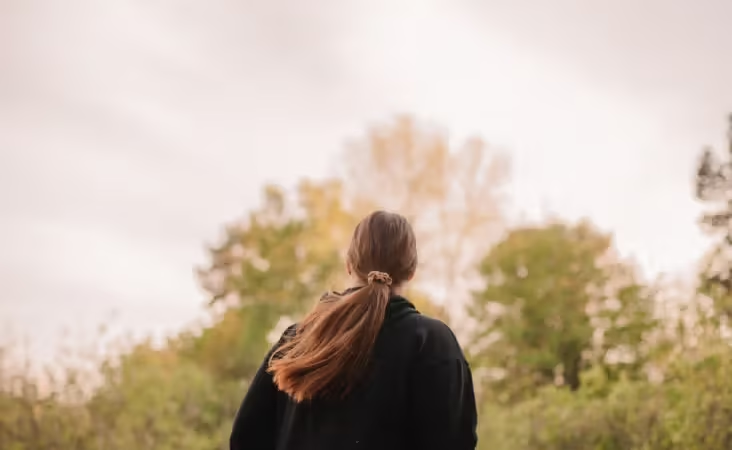
I Spent More Time Outdoors to Ease Autumn Anxiety: Here’s What I Learned
Autumn can be a beautiful season. Cooler temperatures, colorful leaves, cozy evenings, and shorter days can create a peaceful atmosphere. But for some people, the transition from summer to fall can also bring increased stress, worry, low mood, or a general feeling of uneasiness.
Changes in daylight, disrupted routines, colder weather, and the approach of winter can affect how we feel physically and emotionally. When I noticed myself feeling more anxious during the transition into autumn, I decided to try something simple: spending more intentional time outdoors.
I did not expect going outside to solve every problem. Instead, I wanted to see whether small changes in my daily routine could help me feel calmer and more grounded.
Here is what I learned.
Getting Outside Gave My Day More Structure
One of the first changes I noticed was that going outdoors gave me a reason to create a routine.
When the weather becomes colder and the days become shorter, it can be tempting to spend more time indoors. Work, social media, television, and household responsibilities can easily fill the entire day without leaving much opportunity to pause.
I started making a simple commitment to go outside for a short walk whenever possible. It did not need to be a long hike or an intense workout. Even a brief walk around my neighborhood gave me a clear break between different parts of my day.
Having that small outdoor routine helped me feel less stuck in the same environment.
Natural Light Made Me More Aware of the Changing Season
Autumn brings noticeable changes in daylight. The sun may rise later and set earlier, which can influence daily routines and sleep schedules.
Spending time outdoors during daylight helped me become more intentional about getting natural light instead of remaining indoors for most of the day.
I began taking short walks earlier in the day when possible. Sometimes I simply sat outside with a cup of tea or spent a few minutes near a window or in a garden.
While outdoor light is not a treatment for anxiety or depression, exposure to natural light and maintaining a regular daily routine can be helpful parts of a healthy lifestyle.
Walking Gave My Mind Something Else to Focus On
Anxiety can make the mind feel like it is constantly running.
When you are worried, it can be difficult to stop thinking about future problems, responsibilities, or things that might go wrong. Walking outdoors gave me an opportunity to focus on what was happening around me.
I started paying attention to small details: the sound of leaves moving in the wind, changes in temperature, clouds in the sky, and the colors of trees.
This did not make anxious thoughts disappear completely. However, it helped me stop giving every thought my full attention.
The experience reminded me that mindfulness does not always have to involve sitting quietly with your eyes closed. Sometimes it can simply mean noticing what is happening around you.
I Learned That Exercise Doesn’t Have to Be Intense
Another important lesson was that movement does not have to be extreme to be worthwhile.
When people think about exercise, they may imagine running, lifting weights, or spending an hour at the gym. Those activities can certainly be beneficial, but they are not the only options.
A comfortable walk can be a realistic way to add physical activity to your day.
On days when I felt particularly anxious or tired, I found it easier to commit to a short walk than to a demanding workout. Once I was outside and moving, I often felt more motivated to continue.
The goal was not to burn a specific number of calories. It was simply to move my body and create a healthier break from sitting indoors.
Being Outdoors Did Not “Cure” Anxiety
Perhaps the most important thing I learned was that outdoor time should not be viewed as a cure for anxiety.
Anxiety can have many causes, and persistent or severe symptoms may require professional support. Going for a walk can be one useful part of a self-care routine, but it cannot replace appropriate medical or mental health treatment.
If anxiety is interfering with sleep, work, relationships, or everyday activities, talking with a qualified mental health professional can be an important step.
For me, the value of going outdoors was not that it eliminated anxiety. Instead, it gave me another healthy tool for managing difficult moments.
Small Outdoor Habits Can Be Easier to Maintain
I also discovered that consistency mattered more than doing something impressive.
Rather than promising myself that I would spend hours outside every day, I focused on realistic habits.
That might mean taking a 10-minute walk, sitting outside during a break, eating lunch outdoors when the weather was comfortable, or walking to a nearby location instead of driving.
Small habits are often easier to maintain because they require less time and preparation.
What I’ll Keep Doing This Autumn
My experience taught me that taking care of mental well-being does not always require complicated changes.
For me, spending more time outdoors provided movement, daylight, fresh air, and a change of environment. These simple experiences helped create moments when I could step away from daily responsibilities and pay attention to the present.
Autumn does not have to be a season spent entirely indoors. Even when temperatures drop, finding safe and comfortable ways to spend some time outside can be a valuable addition to a healthy routine.
The biggest lesson was simple: you do not have to wait until you feel completely overwhelmed before taking a small step to support your well-being.
Sometimes, that step can simply be opening the door, taking a breath, and going for a walk.